by
by The Leak of Claude Mythos AI: How Dangerous Is It for the General Public?
What Is Artificial Intelligence?
There’s a version of this question that gets a textbook answer — algorithms, data, neural networks. But that doesn’t quite capture what AI actually is in practice. At its core, artificial intelligence is a machine’s attempt to do what we’ve always assumed only humans could: reason, learn, recognize patterns, and make decisions.
It isn’t one single thing. AI is an umbrella term — it covers everything from the spam filter in your email to systems that can write poetry, diagnose cancer from a scan, or navigate a car through traffic without a human at the wheel. The common thread is that these systems improve over time, adapt to new inputs, and in many cases, behave in ways their creators didn’t explicitly program.
That last part is what makes AI so fascinating — and so unsettling.
When and How Did AI Develop?

The idea of artificial intelligence is older than computers themselves. Alan Turing, widely regarded as the godfather of computer science, asked in 1950: “Can machines think?” That question seeded decades of research, false starts, and eventual breakthroughs.
The field formally began in 1956 at a conference at Dartmouth College, where researchers coined the term “artificial intelligence” and set out to build machines that could simulate human reasoning. Progress was slow and uneven. The following decades brought cycles of excitement followed by “AI winters” — periods where funding dried up because the technology simply couldn’t deliver on its promises.
The real turning point came in the 2010s. Faster processors, massive datasets from the internet, and a technique called deep learning — loosely inspired by the structure of the human brain — changed everything. Suddenly, machines could recognize faces, translate languages, and beat world champions at chess and Go. By the early 2020s, large language models like GPT and Claude arrived, capable of holding conversations, writing code, and reasoning through complex problems in ways that genuinely surprised even their creators.
In less than a decade, AI went from a research curiosity to infrastructure. It now runs quietly beneath the surface of nearly everything — banking systems, healthcare diagnostics, social media, search engines, national security tools. And with that ubiquity came power that few people fully understood, let alone governed.
What Are the Applications of AI?
The honest answer is: almost everywhere.

In healthcare, AI is already outperforming radiologists at identifying early-stage tumors in certain types of scans. Drug discovery pipelines that used to take a decade are being compressed. Mental health apps use AI to detect early signs of depression from speech patterns and behavior.
In finance, algorithms make millions of trading decisions per second. Fraud detection systems flag suspicious transactions before humans even notice them. Credit scoring models decide, in milliseconds, whether you get a loan.
In education, AI tutors adapt to individual learning styles and pacing. In agriculture, it predicts crop diseases before they spread. In law, it reviews contracts at a scale no paralegal could match.
Then there’s the darker side of the ledger: surveillance, autonomous weapons, influence operations that generate disinformation at industrial scale, and cyberattacks that can now be planned and executed with machine assistance.
The technology itself is neither inherently good nor bad. That distinction belongs entirely to the people using it — and to the systems, or lack thereof, that govern how it’s deployed.
What Is Claude Mythos AI?

Claude Mythos is Anthropic’s most powerful AI model ever built — or at least, that’s what a draft blog post revealed when it accidentally became public in late March 2026.
Anthropic, the AI safety company founded in 2021 by former OpenAI researchers including Dario and Daniela Amodei, has built a line of AI models under the Claude brand. Their models are tiered — Haiku for speed and efficiency, Sonnet for balance, and Opus for raw capability. Mythos, according to the leaked draft, sits above all of them. It introduces an entirely new tier called Capybara — a name that sounds benign but describes something far from it.
The leaked document described Mythos as “by far the most powerful AI model we’ve ever developed,” noting that it scores “dramatically higher” than Claude Opus 4.6 on tests of software coding, academic reasoning, and cybersecurity. Anthropic confirmed it is testing the model, calling it a “step change” and “the most capable we’ve built to date.”
What makes Mythos different from a standard AI assistant isn’t just that it’s smarter. It’s the cybersecurity dimension. The system helped engineers identify and fix 271 bugs in Mozilla’s Firefox browser and uncovered a long-standing vulnerability in OpenBSD that had reportedly remained undetected for 27 years. Mozilla’s CTO described it as a tool that could turn a skilled engineer into an “elite security expert.”
That’s a compliment. It’s also a warning.
How Did It Leak?
The story of how Mythos became public is — fittingly — a story about human error, not a Hollywood-style hack.
A configuration error in Anthropic’s content management system made close to 3,000 unpublished assets publicly accessible. Among them was a draft blog post announcing the new model. Security researchers Roy Paz of LayerX Security and Alexandre Pauwels from the University of Cambridge discovered the exposed data store. Fortune reviewed the documents and informed Anthropic, after which the company locked things down and attributed the incident to “human error.”
That was the first leak — accidental, and relatively contained.
The second was more alarming. A small group of users on a private Discord forum gained unauthorized access to Claude Mythos Preview on the same day Anthropic announced its limited release to a select group of companies. Anthropic had deliberately restricted the model to approximately 40 organizations — including Microsoft, Apple, and Google — to stress-test its security before any wider rollout.
A loophole in a third-party vendor’s system reportedly allowed the group to access Claude Mythos. The group used previously leaked information to identify the model’s host environment and gain access through the vendor’s setup.
Anthropic told Bloomberg the company was “investigating a report claiming unauthorized access to Claude Mythos Preview through one of our third-party vendor environments.”
David Lindner, the chief information security officer at Contrast Security, put it plainly: “It was bound to happen. The more they add to this elite group, the more likely it was to get released to someone who shouldn’t probably have access to it.”
His concern wasn’t just about Discord users. He suggested that if a random online forum could access the model, it’s likely U.S. adversaries already have access to this tech, which could put American companies and other systems at risk of attacks. “If some group — some random Discord online forum — got access to it, it’s already been breached by China,” he said.
What Are the Threats for the General Public?
Here’s where this stops being a story about corporate security lapses and starts being something more personal.
Most people don’t run critical infrastructure. They’re not CEOs, politicians, or national security officials. So why should they care about a leaked AI model that sounds like it’s mostly relevant to hackers and defense contractors?
The answer is that the threats from AI like Mythos operate at multiple levels — and the general public sits squarely in the middle of several of them.
Cyberattacks on infrastructure we all depend on. Hospitals, water treatment plants, power grids, banks — these are the systems that hold daily life together. AI-assisted attacks can probe these systems at a speed and scale no human attacker could match. Anthropic has reported that a Chinese state-sponsored group ran a coordinated campaign using Claude Code to infiltrate roughly 30 organizations — including tech companies, financial institutions, and government agencies — before the company detected it. Mythos, by all accounts, is orders of magnitude more capable than Claude Code.
Lowering the barrier for sophisticated attacks. One of the most consequential things about AI like Mythos is not what it can do in the hands of experts. It’s what it enables in the hands of non-experts. One analyst wrote that the model has the potential to elevate any ordinary hacker into a nation-state-level adversary. That means the pool of people capable of causing serious harm just expanded dramatically.
The open-source time lag. Here’s a sobering structural reality: open-source AI models that are freely available trail frontier models by roughly 6 to 12 months. That gap has been consistent. So whatever Mythos can do today, freely available models will be able to approximate within a year — possibly sooner. Whatever unauthorized users accessed on that Discord forum may eventually become widely accessible to anyone with an internet connection.
Fraud, manipulation, and disinformation at scale. The general public’s most immediate exposure isn’t a direct cyberattack. It’s the use of advanced AI to impersonate, deceive, and manipulate. Deepfakes, AI-generated voice calls, phishing messages indistinguishable from genuine ones — Mythos-level capability makes all of these easier, cheaper, and harder to detect.
Criminal misuse is already happening. Anthropic’s August 2025 misuse report described real criminal abuse patterns involving Claude, including extortion workflows and low-skill ransomware enablement. These patterns emerged with existing, less capable models. A more powerful leaked system in the wrong hands raises that threat ceiling considerably.
Is It Time to Think About Whether We Should Stop Developing AI?
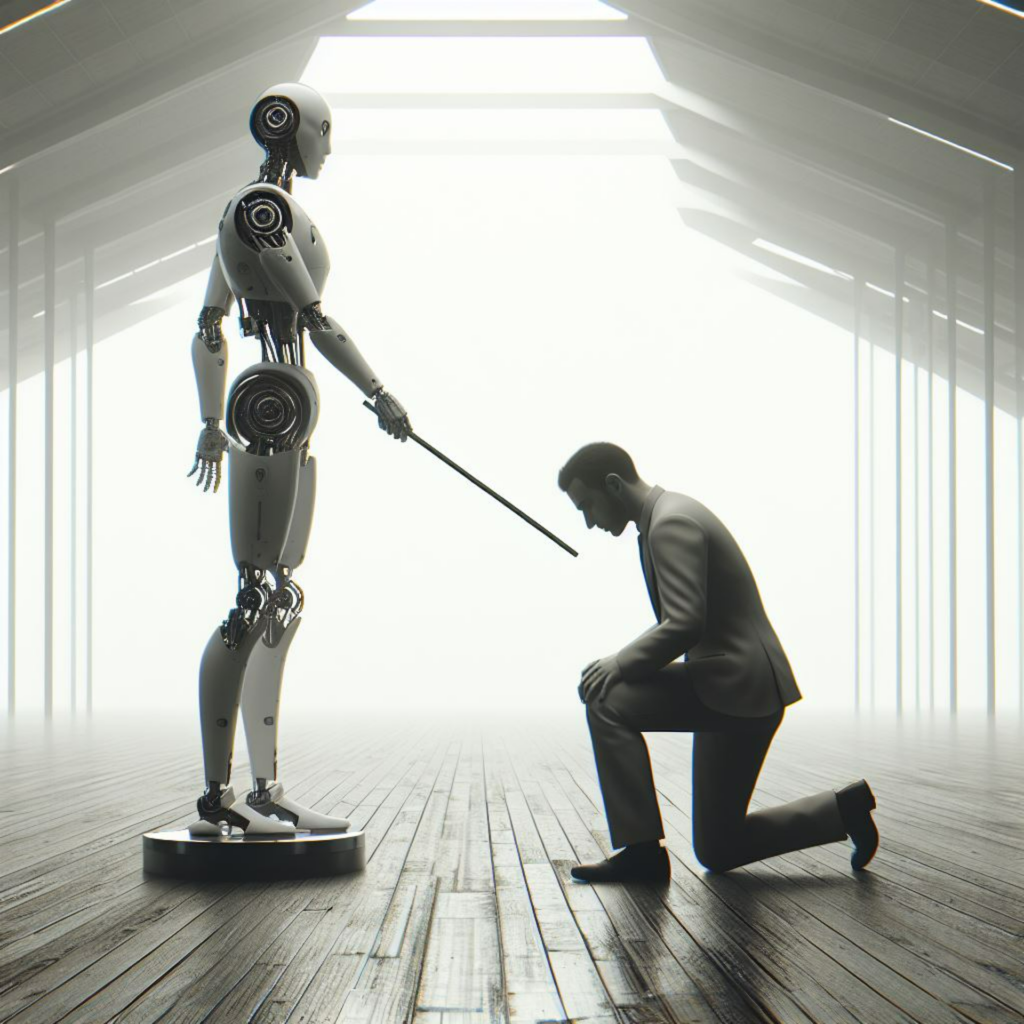
This question tends to split people into two camps: those who think it’s alarmist, and those who think it’s already overdue. Neither camp is entirely right.
The argument for pausing or slowing development isn’t fringe anymore. Respected scientists, former insiders, and even some people who built these systems have called for more deliberation before pressing forward. Their concern isn’t that AI is inherently evil — it’s that the gap between capability and governance is widening faster than it can be closed. Mythos is a perfect case study. A model so powerful that Anthropic kept it from the public, restricted it to 40 vetted companies, and still couldn’t prevent an unauthorized breach within 24 hours of its limited release. That’s not a comforting track record.
The counterargument is equally serious. Stopping AI development doesn’t stop the threats — it just means that the countries and actors with the fewest scruples about safety will be the ones defining what comes next. Defenders need these tools too. In order to build strong cyber defenses, you need to understand what the offense is capable of. Deliberately blinding the researchers and institutions most committed to safety doesn’t make the world safer.
What both sides can agree on, probably, is that the current pace of development has badly outrun the institutional frameworks meant to manage it. Governments are still debating regulations that were written for the AI of five years ago. International agreements on AI governance barely exist. Liability frameworks for AI-caused harm remain murky.
The real question isn’t whether to stop. It’s whether we can create meaningful guardrails fast enough to matter — and whether the people with the power to enforce those guardrails have the will to actually do so.
Conclusion
The leak of Claude Mythos isn’t just a corporate embarrassment for Anthropic. It’s a signal. It tells us that even the most safety-conscious AI labs, operating with genuine care and serious resources, are struggling to contain what they’ve built.
That matters for everyone — not just security researchers, not just Fortune 500 companies, not just governments worried about adversaries. The general public stands downstream of all of it: the infrastructure attacks, the fraud, the AI-powered manipulation, the gradual erosion of trust in digital communication.
We are, in a real sense, living inside an experiment that no one fully signed up for. The technology is advancing faster than our ability to understand its consequences, faster than our laws, and faster — apparently — than even Anthropic’s own security protocols.
None of this means AI is irredeemably dangerous or that progress should stop. But it does mean that the way we’re doing this — at full speed, with inadequate oversight, with critical capabilities leaking out before safety measures are in place — is a gamble. And the stakes are not abstract. They are hospitals, elections, financial systems, and the basic fabric of trust that digital society depends on.
At some point, we have to ask whether going fast is actually getting us where we want to go.
Sources: Fortune, Bloomberg, Sidecar.ai, Techzine Global, MindStudio, Penligent, PhotoNews
Discover more from 𝙲𝙷𝙰𝚁𝚄𝚅𝙰𝙺.𝙲𝙾𝙼
Subscribe to get the latest posts sent to your email.