by
by The Theory of Relativity – All You Need to Know
Some ideas, once they enter your mind, quietly rearrange everything. Einstein’s Theory of Relativity is one of those. It did not just change physics — it rewired how we think about time, space, gravity, and our own place in the universe. And yet, for most people, it stays wrapped in a fog of equations and jargon, something that belongs to scientists in white coats rather than to curious human beings asking honest questions.
This article is an attempt to cut through that fog. No unnecessary complexity, no condescension, no pretending the topic is simpler than it is. Just a clear, honest walk through one of the greatest intellectual achievements in human history.
1. What Is the Cosmos?
Before we can talk about relativity, we need a stage to set it on. That stage is the cosmos — the totality of everything that exists.
The cosmos is not just space. It is space, time, matter, energy, and all the laws that govern how these things interact. It includes every galaxy, every star, every atom in every rock on every planet orbiting every sun you have ever heard of — and countless billions more you have not.
The observable universe alone stretches about 93 billion light-years across. That number is almost meaningless to a human brain built to navigate grocery stores and traffic jams, but try to hold it loosely: it is vast almost beyond comprehension, and it is still expanding.
What makes the cosmos philosophically interesting is that it does not seem to need an outside. It is not sitting inside something else. It is, as far as we can tell, the container and the contained simultaneously. The laws of physics as we know them apply everywhere within it — and the Theory of Relativity is among the most powerful of those laws.
“The cosmos is not just space. It is space, time, matter, energy — and all the laws that bind them together.”
2. What Is a Universe?
People sometimes use ‘cosmos’ and ‘universe’ interchangeably, and in casual conversation, that is fine. But there is a subtle distinction worth drawing.
The universe typically refers to all of spacetime and its contents — the physical reality governed by a single consistent set of physical laws, originating from the Big Bang roughly 13.8 billion years ago. The cosmos, in a broader philosophical sense, can include concepts like the multiverse or realities beyond what we can observe.
Our universe began in an extraordinarily hot, dense state and has been expanding and cooling ever since. Galaxies formed. Stars ignited and died, forging heavier elements. Planets coalesced. Life emerged. And eventually, on a small rocky planet in an unremarkable corner of the Milky Way, a species evolved that could look back at all of this and start asking why.
That questioning impulse — that refusal to accept ‘it just is’ as a final answer — is what eventually produced people like Albert Einstein.
3. What Is Relativity?
Relativity, at its core, is the idea that measurements of certain physical quantities — like time, length, and even mass — are not absolute. They depend on the relative motion or gravitational environment of the observer.
This might sound slippery, even unsettling. We are used to the idea that time is time. A second is a second. The length of a table is the length of a table. Relativity says: not quite.
There are two theories under the relativity umbrella:
Special Relativity (1905): Deals with objects moving at constant velocities, particularly at speeds approaching the speed of light. It established that the laws of physics are the same for all observers moving at constant speed, and that the speed of light in a vacuum is always the same, regardless of who is measuring it.
General Relativity (1915): An extension that incorporates acceleration and gravity. It describes gravity not as a force (as Newton had it) but as a curvature of spacetime caused by mass and energy.
Together, these two theories form what we call the Theory of Relativity — a framework that describes reality far more accurately than anything that came before it.
4. Who Gave Us the Theory of Relativity?
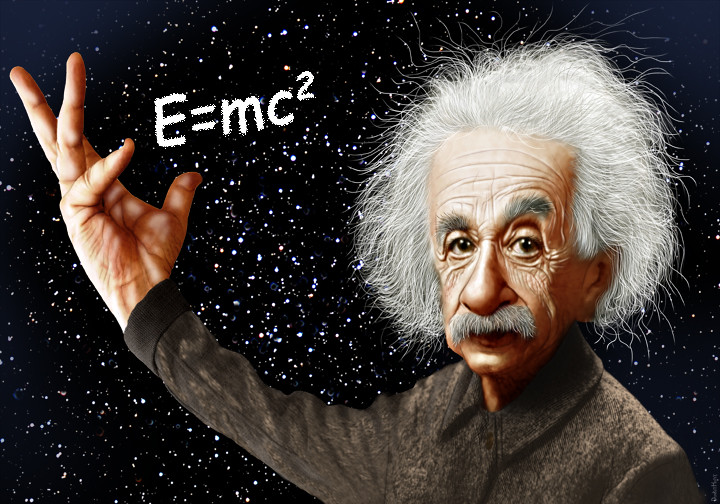
Albert Einstein. Born in Ulm, Germany, in 1879, Einstein was a man whose relationship with formal education was, let’s say, complicated. He was not a poor student, contrary to popular myth, but he chafed against rote learning and authority. He preferred to follow his own curiosity.
In 1905 — his so-called ‘miracle year’ — Einstein published four papers that each, individually, would have made a scientist’s career. One of them introduced Special Relativity. Another derived the famous equation E = mc². He was 26 years old and working as a patent clerk in Bern, Switzerland, because he could not find an academic position.
Ten years later, in 1915, he completed General Relativity — a far more demanding mathematical and conceptual achievement. He reportedly said the theory was so beautiful that he felt it had to be correct even before experimental confirmation. The confirmation came in 1919, when Sir Arthur Eddington observed the bending of starlight around the sun during a solar eclipse, exactly as Einstein’s equations predicted.
Einstein received the Nobel Prize in Physics in 1921 — though, interestingly, not for relativity, but for his explanation of the photoelectric effect. The Nobel committee was apparently still cautious about relativity’s radical implications.
He spent his later years at Princeton’s Institute for Advanced Study, searching for a unified theory that would reconcile general relativity with quantum mechanics — a quest he never completed, and which still occupies physicists today.
“Einstein did not just answer old questions. He showed us that some of our most confident assumptions about reality were wrong from the start.”
5. The Mathematics Involved
Mathematics, in Einstein’s hands, was not decoration — it was the language in which truth was being spoken. Here is an honest overview of the mathematical core of relativity, kept as accessible as possible.
Special Relativity
The most famous equation in all of science:
E = mc²
This says that energy (E) equals mass (m) multiplied by the speed of light (c) squared. Since c is enormous (~3 × 10⁸ metres per second), even a tiny mass contains a staggering amount of energy. This is why nuclear reactions release so much energy from so little fuel.
Special relativity also produces the Lorentz factor (γ), which appears in equations describing time dilation, length contraction, and relativistic mass:
γ = 1 / √(1 − v²/c²)
As v (velocity) approaches c, γ grows toward infinity. This means a clock on a fast-moving spaceship ticks slower relative to a stationary observer, and a ruler aboard that ship appears shorter. These are not illusions — they are real physical effects.
General Relativity
General relativity is governed by the Einstein Field Equations (EFE):
Gμν + Λgμν = (8πG / c⁴) Tμν
In plain terms: the left side describes the curvature of spacetime (Gμν is the Einstein tensor, Λ is the cosmological constant, gμν is the metric tensor). The right side describes the distribution of mass and energy (Tμν is the stress-energy tensor, G is Newton’s gravitational constant).
The equation essentially says: matter and energy tell spacetime how to curve; curved spacetime tells matter how to move. What we experience as gravity is not a force being exerted — it is the natural path (a geodesic) that objects follow through curved spacetime.
The mathematics required to work with general relativity — differential geometry, tensor calculus, Riemannian geometry — is genuinely advanced. Einstein himself had to learn much of it from his friend Marcel Grossmann. But the physical intuition behind it is reachable: heavy objects warp the fabric of space and time around them, like a bowling ball placed on a stretched rubber sheet.
6. Scientific Advancements Made Using This Theory
The Theory of Relativity is not an abstract intellectual exercise. It has produced technologies and discoveries that touch billions of lives.
GPS and Satellite Navigation
Your phone’s GPS relies on satellites in orbit. Those satellites experience both special relativistic effects (their clocks tick slower due to high velocity) and general relativistic effects (their clocks tick faster because they are farther from Earth’s gravitational well). Without applying relativistic corrections, GPS would accumulate errors of several kilometres per day. Relativity is built into the software that tells you where you are.
Black Holes
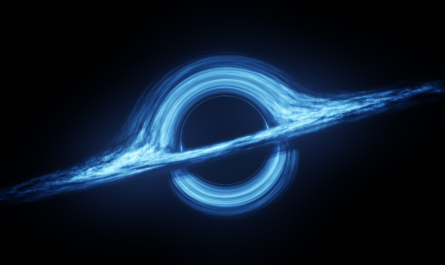
General relativity predicted the existence of black holes — regions where spacetime curvature becomes so extreme that nothing, not even light, can escape. For decades they were considered theoretical curiosities. In 2019, the Event Horizon Telescope produced the first direct image of a black hole’s shadow, in the galaxy M87. In 2022, a second image followed — of Sagittarius A*, the black hole at the centre of our own Milky Way.
Gravitational Waves
In 1916, Einstein predicted that accelerating masses would ripple spacetime itself, like stones thrown into a pond. In September 2015, LIGO (the Laser Interferometer Gravitational-Wave Observatory) detected gravitational waves for the first time — produced by two black holes merging 1.3 billion light-years away. The detection was accurate to a fraction of a proton’s width. This opened an entirely new way of observing the universe.
Cosmology and the Big Bang
Einstein’s field equations, when applied to the universe as a whole, predict a dynamic cosmos — one that is either expanding or contracting, not static. Einstein initially resisted this, adding a ‘cosmological constant’ to his equations to force a static universe. When Edwin Hubble confirmed in 1929 that galaxies are indeed moving apart, Einstein called the cosmological constant his ‘greatest blunder.’ Ironically, it has since been revived to explain dark energy and the accelerating expansion of the universe.
Nuclear Energy and Weapons
E = mc² underpins nuclear physics. The mass defect in nuclear reactions — the tiny difference between the mass of reactants and products — is converted into enormous amounts of energy. This is the principle behind nuclear power plants and, tragically, nuclear weapons. The equation did not cause these developments, but it provided the theoretical framework that made them intelligible.
7. What the Theory Has Revealed About Reality
Beyond specific technologies, relativity has shifted our fundamental picture of reality in ways that are still being absorbed.
Time is not universal. Two people moving at different speeds, or living at different gravitational altitudes, age at different rates. Time is not a river flowing the same speed everywhere — it is more like a landscape with hills and valleys.
Space and time are unified. Before Einstein, space was where things were, and time was when things happened. Relativity fused them into a single four-dimensional fabric: spacetime. An event is not located in space, or in time — it is located in spacetime.
Mass and energy are equivalent. They are two expressions of the same underlying thing, interconvertible at the rate specified by c².
Gravity is geometry. What Newton called a mysterious force acting at a distance is, in Einstein’s picture, the curvature of spacetime caused by mass. The Earth does not pull you down; it warps the spacetime around it, and you follow the curved path.
The speed of light is a cosmic speed limit. Nothing with mass can reach or exceed c. As an object approaches the speed of light, the energy required to accelerate it further approaches infinity. This is not an engineering problem to be solved — it is a fundamental feature of how reality works.
The universe had a beginning. The Big Bang model, built on general relativity, describes the universe as having emerged from an extremely hot, dense state roughly 13.8 billion years ago. Before this point, current physics has no framework — the equations break down at the singularity.
“Gravity is not a force reaching across empty space. It is the shape of spacetime itself, curved by the presence of mass.”
8. Mistakes, Limitations, and Ongoing Debates
Relativity is extraordinarily well-tested and has passed every experimental check thrown at it. But it is not the last word on the universe.
The Cosmological Constant Controversy
Einstein introduced, then retracted, then saw resurrected the cosmological constant (Λ). Today it is associated with dark energy — the mysterious force driving the universe’s accelerating expansion. But physicists do not fully understand what dark energy is, and there is a significant discrepancy between its observed value and what quantum field theory predicts. This is sometimes called the worst prediction in physics.
The Incompatibility with Quantum Mechanics
This is the biggest open problem in theoretical physics. General relativity describes the large-scale structure of the universe beautifully. Quantum mechanics describes the behaviour of particles at the smallest scales, equally beautifully. But the two theories are fundamentally incompatible — they use different mathematical frameworks and make different assumptions about the nature of reality.
At extreme conditions — like the singularity inside a black hole, or the earliest moment of the Big Bang — you need both theories simultaneously, and they refuse to work together. A theory of quantum gravity that reconciles them does not yet exist, though candidates like string theory and loop quantum gravity are under active development.
Dark Matter and Dark Energy
General relativity, applied to the motion of galaxies and large-scale cosmic structure, requires the existence of large amounts of matter and energy that we cannot see or directly detect. About 27% of the universe’s energy content is estimated to be dark matter; about 68% is dark energy. We do not know what either of these are. They are placeholders in our equations — acknowledgments that something is there that we do not understand.
Singularities
General relativity predicts its own breakdown at singularities — points of infinite density and curvature inside black holes and at the Big Bang. Most physicists believe this signals that general relativity is incomplete rather than literally predicting infinities. A theory of quantum gravity would presumably smooth these out.
9. How Relativity Changes Our Perspective on Life
This might seem like a detour into philosophy, but it is an honest and important question. What does it mean — for a person, for a life — to know these things?
First, it is a humbling. We tend to assume that our experience of reality is reality. We feel time flowing uniformly, space as fixed and neutral, the ground pulling us with a constant force. Relativity reveals that all of these intuitions are parochial — accurate enough for daily life, but not fundamental truths about the universe. Reality is stranger and richer than the slice of it we inhabit.
Second, it is a reminder that our most confident assumptions can be wrong. Newton’s mechanics worked beautifully for over 200 years. Trains ran on schedule, planets orbited predictably, cannons fired with calculated accuracy. And then Einstein came along and showed that the entire framework, while useful, was an approximation. This should make us humble about our current best theories — including relativity itself.
Third, it dissolves certain kinds of naive thinking. When people talk about traveling into the future, they are using physics that is real and tested. The astronauts on the International Space Station age slightly more slowly than people on the ground. Time travel to the future is not science fiction — it happens, on a small scale, every day. This should give pause to anyone inclined to dismiss physics as irrelevant to the ‘real world.’
Fourth, there is something quietly profound about the idea that the universe is a four-dimensional spacetime fabric, and that what we call gravity is its curvature. We are not moving through space while time ticks past us like a metronome. We are tracing paths through spacetime, and the shape of that spacetime depends on the matter and energy within it. We are, in a very real sense, part of the fabric, not observers standing outside it.
Finally, the story of how this theory came to be is its own kind of inspiration. Einstein did not have access to experimental data unavailable to others. He had the same facts everyone else had. What he had, unusually, was the willingness to follow an idea to its logical conclusion even when that conclusion contradicted centuries of received wisdom. The capacity for that kind of thinking does not belong exclusively to physicists.
“We are not moving through space while time ticks past us. We are tracing paths through spacetime — and the shape of that spacetime is written by mass and energy.”
Conclusion
The Theory of Relativity is not a single insight — it is a restructuring of the entire conceptual landscape on which physics, and to some extent philosophy, stands.
It told us that time dilates and space contracts at high velocities, that mass and energy are interchangeable, that gravity is the geometry of spacetime rather than a force, and that the universe is dynamic — born, evolving, and heading somewhere. It gave us GPS, gravitational wave astronomy, the theoretical foundation for nuclear energy, and the tools to describe the large-scale structure of the cosmos.
It also left us with unresolved questions — about the nature of dark matter and dark energy, about the incompatibility between general relativity and quantum mechanics, about what happens at singularities. These are not failures of the theory; they are the frontier.
What makes the Theory of Relativity remarkable is not just that it is correct in its domain, but that it required human beings to abandon intuitions we had carried for thousands of years and replace them with something more accurate, more beautiful, and far stranger. It is a demonstration of what careful thinking, honest questioning, and the willingness to follow the evidence can produce.
In the end, the universe does not owe us comprehensibility. It does not have to be the kind of place a creature like us can understand. And yet, with patience and rigour, we keep finding that it is — at least partially, at least up to a point. That, perhaps, is the most astonishing thing of all.
Discover more from 𝙲𝙷𝙰𝚁𝚄𝚅𝙰𝙺.𝙲𝙾𝙼
Subscribe to get the latest posts sent to your email.