by
by The Photon Field: Carrier of Electromagnetism and Light
I’ve spent way too many nights staring at the ceiling thinking about light. Not just how it lets us see, but what it actually is. Turns out, light isn’t little bullets or waves bouncing around—it’s excitations in a single, universal field called the photon field. This one field carries the entire electromagnetic force, from the static cling on your sweater to the radio waves bringing music to your phone to the sunlight warming your face. It’s the most familiar force, yet in quantum terms, it’s beautifully simple and mind-bending.
Let me try to explain it the way it finally sank in for me, without too much jargon overload.
What exactly is a field in physics?
Same story as with the fermions: space isn’t empty. It’s filled with invisible fields that have a value (or several) at every point. Most of the time those values are zero—quiet. But disturb them with energy, and they ripple. Those ripples are particles. The photon field is a vector field (it has direction), and when it vibrates transversely (sideways, not along the direction of travel), we get photons. No photon without the field being excited; no field excitation without the possibility of a photon.
So what’s a photon?
A photon is the quantum of the electromagnetic field—the smallest indivisible unit of light or any EM radiation. It has zero rest mass, travels at exactly c (the speed of light), carries energy E = hν (Planck’s constant times frequency), momentum p = E/c, and has spin 1 (but only two polarization states because it’s massless). It’s its own antiparticle. Photons mediate the electromagnetic force: when two electrons repel, they’re exchanging virtual photons. Real photons are the ones we detect as light, radio, X-rays, gamma rays—the whole spectrum.
What is the photon field?
It’s the quantum field whose excitations are photons. In classical terms, it’s the electromagnetic potential A^μ (four-vector), but quantized. The field is massless (gauge invariance forbids a mass term—adding one would ruin the symmetry and introduce a third polarization). It’s a gauge field, meaning local phase changes in charged fields force the existence of this compensating field. In QED (quantum electrodynamics), the photon field couples to the current of charged particles (like electrons). The Lagrangian has a term -1/4 F_{μν}F^{μν} for the free field (that’s the energy in electric and magnetic fields) plus interaction terms like e \bar{ψ} γ^μ ψ A_μ for how electrons talk to it.
Photon field and the existence of… well, pretty much everything we experience
Without the photon field, no electromagnetism. No electric forces holding atoms together, no chemical bonds, no molecules, no water, no DNA, no biology. Chemistry is electrons shuffling around, guided by the photon field. Light itself? That’s real photons from this field. Your vision: photons from the Sun (or a bulb) hit objects, some get absorbed and re-emitted at lower energies, others scatter into your eyes, excite the electron field in retinal cells, trigger signals to your brain. Every color you see, every shadow, every rainbow is the photon field dancing. Even magnetism—your fridge magnet or Earth’s field shielding us from solar wind—is the photon field in motion. Turn off this field, and the universe goes dark, silent, and chemically dead.
Photon field and gravity
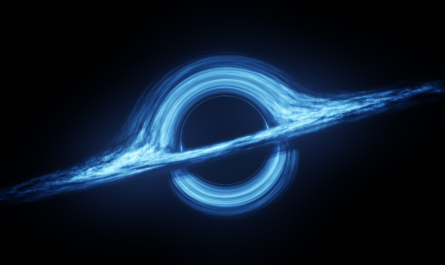
Gravity doesn’t distinguish: anything with energy curves spacetime. Photons have energy (E = pc), so they gravitate. Light bends around stars and black holes—Eddington’s 1919 eclipse confirmed it. In general relativity, photons follow null geodesics in curved spacetime; the photon field lives on that curved background. But here’s the tension: QED describes the photon field quantum-mechanically, perfectly, to insane precision (like 10 decimal places in the electron’s magnetic moment). Gravity is still classical in our best theories. We expect a graviton—a hypothetical spin-2 quantum of the gravitational field—but we have no working quantum gravity. Photons feel gravity but don’t source it strongly (their energy density is tiny compared to matter). Still, in extreme places like near black holes or the early universe, the interplay matters. The photon field reminds us gravity is the odd one out—universal yet stubbornly non-quantum.
How does knowing all this actually change how you look at life?
It makes the ordinary surreal. That beam of sunlight coming through the window? It’s excitations of a field that’s been rippling since the Big Bang, carrying energy across 150 million kilometers in about eight minutes, then slamming into your skin or your eye. Every glance at a friend’s face is trillions of photon exchanges between electron fields. Colors aren’t “in” objects—they’re the result of the photon field responding to atomic structure. It shrinks the distance between you and the cosmos: the same field that lets you read this on a screen also powers stars and carries ancient light from galaxies billions of years away. Life feels less isolated. We’re not separate from the universe; we’re bathed in its oldest messenger. Makes gratitude easier—every sunrise is a direct line to the photon field saying, “Hey, still here, still carrying energy, still making sight possible.”
Wrapping it up
The photon field is the quiet backbone of electromagnetism and light—the one quantum field we interact with most directly, yet understand so deeply through QED. It’s massless, spin-1, gauge-mediated, and responsible for every force that isn’t gravity, strong, or weak. It lets us see, touch, feel warmth, use electricity, and ponder the universe. We still chase a full quantum gravity picture, but the photon field stands as a triumph: the most precisely tested theory in physics. Next time you flip a light switch or watch the sunset, remember—it’s not just “light.” It’s the photon field waking up, whispering across space, and reminding us how connected everything really is. That’s the part that never gets old.
Discover more from 𝙲𝙷𝙰𝚁𝚄𝚅𝙰𝙺.𝙲𝙾𝙼
Subscribe to get the latest posts sent to your email.