by
by What is Philosophy?
Philosophy is one of humanity’s oldest and most enduring pursuits. It is the discipline that asks the deepest questions: What is real? What is true? What is good? What is beautiful? The word itself comes from the Greek philo (love) and sophia (wisdom), meaning “love of wisdom.” From the earliest thinkers in Greece, India, China, and beyond, philosophy has been the attempt to understand existence and to live wisely.
In India, a parallel concept developed: Darshan. Derived from the Sanskrit root drish, meaning “to see,” Darshan refers to direct vision or insight into truth. Unlike the purely analytical approach often associated with Western philosophy, Darshan emphasizes experiential realization. It is not enough to think about truth; one must see it, live it, and embody it. Thus, while philosophy and Darshan are not identical, they are deeply connected, both seeking wisdom but through slightly different paths.

(Credit: NASA, ESA, and S. Beckwith (STScI) and the HUDF Team)
Philosophical Timeline: 10,000 Years of Thought
Prehistoric and Ancient (before 2000 BCE)
- Early mythological and cosmological ideas in Mesopotamia, Egypt, and the Indus Valley.
- Oral traditions in indigenous cultures emphasizing harmony with nature and community.
Classical Age (2000 BCE – 500 CE)
- India: Vedic hymns, Upanishads, and the rise of the nine Darshanas.
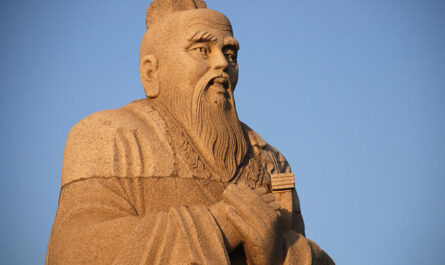
- China: Confucius (551–479 BCE), Laozi (Daoism), and later Legalist thinkers.
- Greece: Pre-Socratics (Thales, Heraclitus), Socrates, Plato, Aristotle.
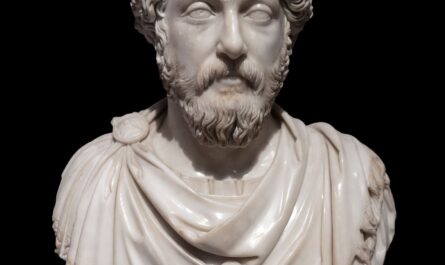
- Rome: Stoicism (Seneca, Marcus Aurelius), Epicureanism, and Cicero’s humanism.
- Buddhism and Jainism: Flourishing across South Asia with profound ethical and metaphysical insights.
Medieval Period (500–1500 CE)
- India: Advaita Vedanta (Shankara), Bhakti movements blending philosophy and devotion.
- Islamic world: Avicenna, Averroes, Al-Ghazali, and Sufi mystics.
- Europe: Scholasticism (Augustine, Aquinas), debates on faith and reason.
- China/Japan: Neo-Confucianism, Zen Buddhism.
Renaissance and Enlightenment (1500–1800 CE)
- Humanism in Europe emphasizing creativity and dignity.
- Rationalism (Descartes, Spinoza, Leibniz).
- Empiricism (Locke, Hume).
- Kant synthesizing rationalism and empiricism.
- Political philosophy: Hobbes, Rousseau, Montesquieu shaping modern democracy.
Modern Era (1800–1900 CE)
- German Idealism (Hegel, Fichte, Schelling).
- Utilitarianism (Bentham, Mill).
- Marxism (Karl Marx, Friedrich Engels).
- Pragmatism (Peirce, William James).
Contemporary (1900 CE – present)
- Existentialism (Kierkegaard, Sartre, Camus).
- Analytic philosophy (Russell, Wittgenstein).
- Postmodernism (Foucault, Derrida).
- Indian modern thinkers (Aurobindo, Radhakrishnan, Gandhi).
- Global indigenous revivals emphasizing ecological and communal wisdom.
The Nine Indian Philosophies (Darshanas)
India’s intellectual heritage is especially rich, with nine classical systems recognized as major schools of thought:
- Nyaya – Logic and epistemology; methods of reasoning and sources of valid knowledge.
- Vaisheshika – Atomism; categorization of reality into substances, qualities, and actions.
- Samkhya – Dualism between Purusha (consciousness) and Prakriti (matter).
- Yoga – Practical discipline of mind and body leading to liberation.
- Mimamsa – Ritual-centered philosophy emphasizing dharma and Vedic authority.
- Vedanta – Metaphysical exploration of Brahman (ultimate reality) and Atman (self).
- Jain philosophy – Non-violence (ahimsa), multiplicity of viewpoints (anekantavada).
- Buddhist philosophy – Impermanence, dependent origination, and the path to Nirvana.
- Charvaka – Materialism and skepticism, rejecting supernatural explanations.
Methodology of Philosophy
Philosophy is not simply speculation; it is a disciplined way of thinking. Over centuries, philosophers have developed methods to ensure that their inquiries are rigorous and meaningful. These methods include:
- Critical Inquiry: Philosophy begins with questions. Socrates asked, “What is justice?” The Buddha asked, “Why is there suffering?” These questions are not trivial—they challenge assumptions and open new paths of thought.
- Reasoning and Logic: Arguments must be coherent. Aristotle formalized logic, while Nyaya philosophers in India created detailed systems of inference. Logic ensures that conclusions follow from premises.
- Dialogue and Debate: Philosophy thrives in conversation. Socratic dialogues, Buddhist debates in Nalanda, and medieval scholastic disputations all show how ideas are tested through dialogue.
- Experience and Reflection: Especially in Indian Darshan, philosophy is not only intellectual but experiential. Yoga, meditation, and spiritual practice are methods of realizing truth directly.
Thus, philosophy combines rational analysis with lived experience, making it both intellectual and practical.
Why Philosophy Matters
Philosophy is often called the mother of all disciplines because it gave birth to science, politics, law, and ethics. Before physics existed, it was “natural philosophy.” Before psychology became empirical, it was philosophical reflection on the mind. Political science grew from debates about justice and governance.
Philosophy matters because:
- It teaches critical thinking, helping us question assumptions.
- It provides ethical frameworks, guiding decisions in law, medicine, and politics.
- It integrates knowledge, connecting diverse fields into a coherent worldview.
- It inspires personal growth, encouraging us to live examined lives.
Without philosophy, knowledge would be fragmented. With philosophy, knowledge becomes integrated and purposeful.
Philosophy and Science
Science and philosophy are deeply intertwined. Science seeks empirical truths—facts about the natural world. Philosophy asks about the nature of truth itself. For example:
- What counts as evidence?
- What is causality?
- Can science explain consciousness?
Philosophy frames these questions, while science attempts to answer them. Many great scientists were also philosophers: Newton wrote on theology and metaphysics; Einstein reflected on the nature of reality. Philosophy clarifies scientific concepts and explores their implications, ensuring that science remains grounded in meaning.
Philosophy and Religion
Religion offers faith, rituals, and community. Philosophy provides critical reflection on those beliefs. In India, Darshan often blends both, treating philosophy as a spiritual path. Vedanta, for example, is both a philosophy and a religious vision of unity with Brahman. In the West, thinkers like Augustine and Aquinas sought to reconcile faith with reason, showing that belief and rational inquiry can coexist.
Philosophy does not replace religion but deepens it. It asks: What does faith mean? How do we interpret sacred texts? How do we reconcile divine will with human freedom? In this way, philosophy enriches religious life by making it more reflective and profound.
Philosophy and Life
Philosophy is not abstract alone—it shapes daily choices, ethics, and worldview. Socrates spoke of the “examined life,” insisting that reflection is essential for a meaningful existence. Buddha offered the Eightfold Path, a practical guide to ethical living and spiritual liberation. Confucius emphasized harmony in relationships and society.
Philosophy teaches resilience, clarity, and compassion. It helps us navigate moral dilemmas, confront suffering, and find purpose. Whether deciding how to act in a crisis, how to treat others, or how to understand ourselves, philosophy provides tools for living wisely. It is as practical as it is profound.
Conclusion
Philosophy, whether as Greek sophia or Indian Darshan, is humanity’s oldest intellectual pursuit. It bridges science and spirituality, questions and answers, thought and practice. Its importance lies not only in shaping civilizations but also in guiding individuals toward truth, meaning, and liberation. Philosophy is not just the mother of disciplines—it is the heartbeat of human wisdom, a timeless companion in humanity’s search for understanding.
Discover more from 𝙲𝙷𝙰𝚁𝚄𝚅𝙰𝙺.𝙲𝙾𝙼
Subscribe to get the latest posts sent to your email.