by
by Why Medieval/Renaissance Neo-Confucianism Is the Key to Modern Crypto
If you spend any time scrolling through crypto Twitter or reading Web3 whitepapers, you’ll notice a lot of talk about cryptography, game theory, and free-market economics. But if you think Satoshi Nakamoto invented the conceptual framework for decentralized ledgers out of thin air in 2008, you’re missing the bigger picture.
To truly understand where the next multi-trillion-dollar shift in blockchain technology is going, you have to look back nearly a thousand years. Specifically, to the Song and Ming dynasties of China, where a group of philosophers radicalized traditional thought into what we now call Neo-Confucianism.
At first glance, pairing a medieval ethical philosophy with algorithmic tokens seems absurd. Neo-Confucianism is famous for its strict focus on social order, self-cultivation, and statecraft. Crypto is famous for its rebellious, borderless, “code is law” ethos. Yet, when you strip away the modern jargon, the underlying engineering problems are identical. Both systems are obsessed with a singular, profound question: How do you create an unshakeable, universal truth without relying on a corruptible central authority?
Understanding this connection isn’t just an academic exercise. It is the definitive macro-thesis for the future of decentralized networks. Here is why Medieval and Renaissance Neo-Confucianism is the ultimate philosophical key to modern crypto—and how recognizing this trend early can give you a massive edge in the market.
1. The Two Pillars of Truth: Li vs. Qi and the Genesis Block
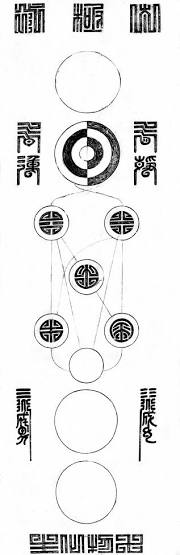
To build a trustless system, you first have to define what “truth” actually is. In crypto, truth is a state of ledger entries—knowing exactly who owns what at any given millisecond. In the 11th century, the foundational Neo-Confucian thinker Zhu Xi faced a similar challenge trying to explain the universe without relying on arbitrary mythological gods.
Zhu Xi proposed that everything in existence is governed by the interplay of two forces:
- Li (理): The universal, immutable blueprint or principle. It is the abstract logic that governs how things should work.
- Qi (氣): The physical matter, energy, or data that gives form to the blueprint. It is concrete, dynamic, and constantly changing.
Now, look at the architecture of a modern blockchain.
A smart contract deployment on Ethereum is the ultimate modern manifestation of Li. It is a set of permanent, immutable logical laws written in Solidity code. It dictates exactly how tokens move, how liquidations happen, and how consensus is reached. The actual transactions flowing through the network—the volatile gas fees, the fluctuating token balances, the validator activity—are Qi.
┌────────────────────────────────────────┐
│               THE UNIVERSE             │
│  Li (Universal Law) ──> Qi (Matter)    │
└────────────────────────────────────────┘
                    │
                    ▼
┌────────────────────────────────────────┐
│               BLOCKCHAIN               │
│  Smart Contract ────> State Data       │
└────────────────────────────────────────┘
Without Li, the blockchain is just a chaotic mess of unorganized data (Qi). Without Qi, the smart contract is dead code sitting in a vacuum. Neo-Confucianism taught that the universal principle is stamped into every individual object. Similarly, every single node in a decentralized network holds a complete copy of the entire blockchain’s genetic blueprint.
2. Wang Yangming’s “Unity of Knowledge and Action” is the Original Smart Contract
During the Renaissance era of Neo-Confucianism (the Ming Dynasty), a brilliant general and philosopher named Wang Yangming grew frustrated with the academic rigidity of Zhu Xi’s ideas. He argued that you cannot separate knowing what is right from actually doing it. He called this core philosophy Zhi Xing He Yi (知行合一)—the Unity of Knowledge and Action.
In Wang’s view, if you claim to know that something is wrong, but you still do it, you don’t actually truly know it yet. True knowledge is inherently active. For example, knowing that a stove is hot is inseparable from the action of pulling your hand away from it.
“Knowledge is the direction for action; action is the effort of knowledge.” — Wang Yangming
This isn’t just great life advice; it is the exact technical definition of a Smart Contract.
In traditional financial systems, knowledge and action are separated by massive operational gaps. If you take out a bank loan, the “knowledge” is the paper contract you signed. The “action” relies on human lawyers, courts, and central banks enforcing that contract weeks or months down the line if things go wrong.
A smart contract eliminates this latency. It fuses knowledge and action into a single execution layer. If a decentralized finance (DeFi) loan falls below its collateralization ratio, the liquidation isn’t debated in court. The code automatically triggers the auction. The state change is instantaneous. In a Web3 world, to know the condition is to execute the outcome. It is Wang Yangming’s ultimate dream realized via cryptographic assembly language.
3. The Decentralization Matrix: Comparing Empires and Blockchains
To see how these concepts map perfectly onto our modern digital economy, we can look at how human coordination models have evolved over time. The structural battles fought by medieval scholars parallel the exact trade-offs modern developers make when picking between different blockchain layers.
| Philosophical Concept | Historical Context (Song/Ming Dynasty) | Crypto/Web3 Equivalent | Economic Implication |
| Zhu Xi’s Orthodox Li | Imperial Civil Service exam standardizing state bureaucracy. | Bitcoin Core Protocol / Layer 1 Consensus. | Uncompromised security and immutability; the rock-solid base layer. |
| Wang Yangming’s Mind Theory | Intuitive internal morality; empowering the individual agent. | Smart Contracts & DAOs (Decentralized Autonomous Organizations). | Elimination of manual middlemen; programmatic trust and automated execution. |
| Self-Cultivation (Gewu) | Rigorous study and investigation of things to find truth. | Zero-Knowledge Proofs (ZKPs) / Cryptographic Verification. | Privacy-preserving verification; proving a state statement is true without revealing the raw data. |
| Lineage Trusts | Decentralized, family-run cooperative assets independent of the Emperor. | Multi-sig Wallets / Distributed Web3 Treasuries. | Sovereign asset protection against hostile state seizure or arbitrary inflation. |
4. Resolving the Oracle Problem Through “Investigating Things”
One of the biggest vulnerabilities in modern crypto is the Oracle Problem. A blockchain is a closed loop; it can verify data inside its own network perfectly, but it has no native way of knowing if a real-world event actually happened. Did it rain in London today? Did team A beat team B? If a smart contract relies on a centralized API feed for this real-world info, that feed becomes a single point of failure prone to manipulation.
Neo-Confucians spent centuries debating a similar concept called Gewu (格物), often translated as the “Investigation of Things.” How does a human mind accurately pull objective truth out of the messy external world?
Zhu Xi argued for an external, empirical approach: you must rigorously study the external world, piece by piece, until a sudden flash of universal understanding hits you. Wang Yangming, conversely, argued that the external world can deceive you, so you must look inward to find the intuitive correctness (Liangzhi) inherent in the human mind.
Modern decentralized oracle networks, like Chainlink, combine both of these schools of thought to solve the web’s trust problem:
- External Investigation (Zhu Xi’s Gewu): The network uses multiple independent node operators to fetch real-world data from dozens of different data streams.
- Internal Consensus (Wang Yangming’s Liangzhi): The nodes cryptographically aggregate these external findings. If one node lies or passes along corrupted data, the internal consensus protocol identifies it as an anomaly, slashes its staked tokens, and throws out the bad data.
By setting up these rigorous verification checks, crypto achieves what medieval philosophers could only write essays about: a practical, mathematical system for pulling uncorrupted truth out of an imperfect world.
5. The Macro Investment Thesis: Why This Matters for Your Portfolio
Connecting philosophy to blockchain architecture is fascinating, but how do you leverage this insight to build actual wealth in the markets?
The answer lies in recognizing the core shift toward sovereign coordination structures. Just as Neo-Confucianism provided the intellectual framework that allowed merchants and local communities to thrive during dynastic transitions without total reliance on the imperial capital, crypto provides the rails for individuals to safeguard capital outside of legacy central banking systems.
Where the Capital is Moving
- Modular Blockchain Architecture (Celestia, EigenLayer): These protocols separate the consensus layer (the immutable Li) from the execution and data availability layers (the active Qi). By recognizing that a chain shouldn’t try to process everything in one place, modular infrastructure is drastically lowering transactional costs.
- Privacy Infrastructure & ZK-Rollups: Zero-knowledge technology allows a user to prove they have the capital or credentials required for a transaction without exposing their identity or private data. It is the technological peak of self-sovereign verification.
Conclusion: The Digital Renaissance
We are living through a massive paradigm shift. The systems that governed the 20th century—highly centralized corporate boards, legacy commercial banks, and opaque regulatory institutions—are struggling to keep up with a fast-moving, digital-first world.
The solution isn’t to descend into chaotic lawlessness. The solution is to build systems where rules are enforced by math and code rather than the promises of flawed individuals.
Medieval and Renaissance Neo-Confucianism showed us that human beings have always craved an objective framework for truth, balance, and unified action. Crypto simply takes those ancient, deeply human insights and gives them an immutable, cryptographic engine. The technology is new, but the philosophy is timeless. By understanding the timeless principles driving this shift, you aren’t just speculating on volatile digital tokens—you are investing in the very architecture of the next global renaissance.
Disclaimer: The information provided in this article is for educational, philosophical, and informational purposes only. It does not constitute financial, investment, or legal advice. Cryptocurrencies and blockchain assets are highly volatile and speculative. Always conduct your own research and consult with a certified financial professional before making any investment decisions.
Discover more from 𝙲𝙷𝙰𝚁𝚄𝚅𝙰𝙺.𝙲𝙾𝙼
Subscribe to get the latest posts sent to your email.