by
by The Western Secret to Burnout: How Stoicism Can Optimize Your Career
You know the feeling. It’s 9:00 PM on a Tuesday. You’re staring at a glowing screen, your jaw is clenched so tight it aches, and you have a pit in your stomach that coffee can no longer cure. You aren’t just tired; you are structurally exhausted. Your emails feel like a barrage, your boss’s Slack messages spark a mild panic response, and the career you worked so hard to build feels like a trap.
Welcome to the modern burnout epidemic.
According to recent workplace wellness reports, over 70% of professionals report experiencing burnout symptoms at least once in their careers. We’ve been told the solutions are simple: take a vacation, download a meditation app, or buy a more ergonomic desk chair. But these are band-aids on a broken engine.
The truth is, the root of corporate burnout isn’t just a high workload. It’s a systemic psychological friction: our internal desire to control things that are fundamentally outside of our power.
But what if the antidote to this modern crisis isn’t a new-age wellness trend, but an ancient, battle-tested framework from Athens and Rome? Enter Stoicism—the ultimate “operating system” for career resilience and high-stakes optimization.
Why the Corporate World is a Breeding Ground for Burnout
To understand how Stoicism solves burnout, we have to look at how we got here. Modern work environments are fast, chaotic, and heavily dependent on metrics we cannot entirely control.
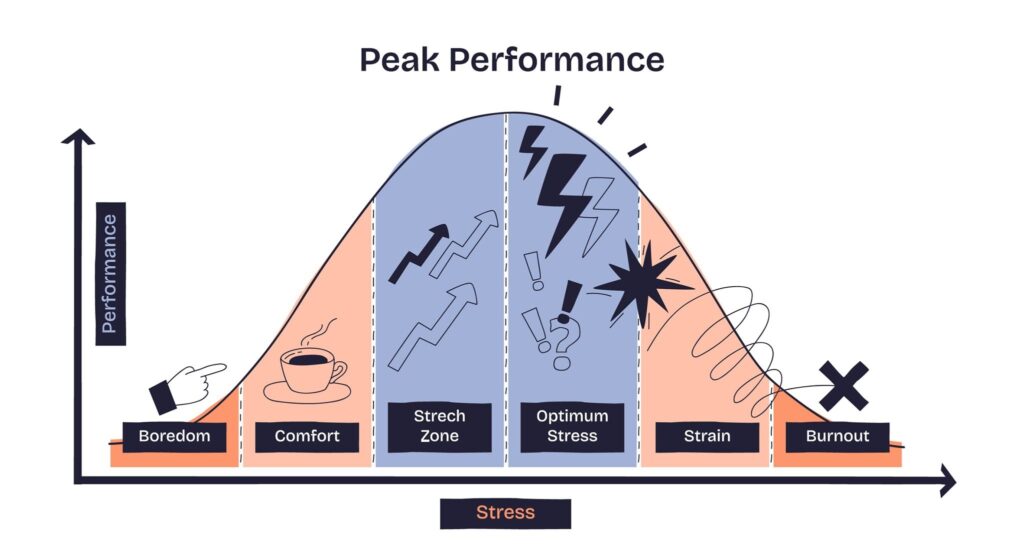
As the performance curve above shows, there is a fine line between a healthy challenge and total burnout. When stress becomes chronic and unmanaged, performance drops off a cliff. Burnout generally stems from three systemic illusions:
- The Illusion of Control: Believing that if you just work hard enough, you can force your clients to say yes, your team to never make mistakes, and the economy to stay stable.
- The Tethering of Identity to Output: When your self-worth is entirely tied to your job title, a bad quarterly review isn’t just feedback—it’s an existential crisis.
- The Constant Anticipation of Disaster: Spending hours catastrophizing about potential layoffs, missed targets, or difficult conversations before they even happen.
When you spend 40 to 60 hours a week trapped in these thought patterns, your nervous system burns out. It’s the mental equivalent of redlining a car engine for thousands of miles without an oil change.
The Stoic Framework: An Operating System for the Corporate World
When people hear the word “stoic,” they often picture a cold, emotionless robot who suppresses their feelings and silently endures suffering. This is a massive misconception.
True Stoicism—pioneered by a Roman emperor (Marcus Aurelius), a wealthy political advisor (Seneca), and a former slave who became a philosopher (Epictetus)—is a philosophy built for action. It doesn’t ask you to stop feeling; it teaches you to analyze your emotions objectively so they don’t hijack your career.
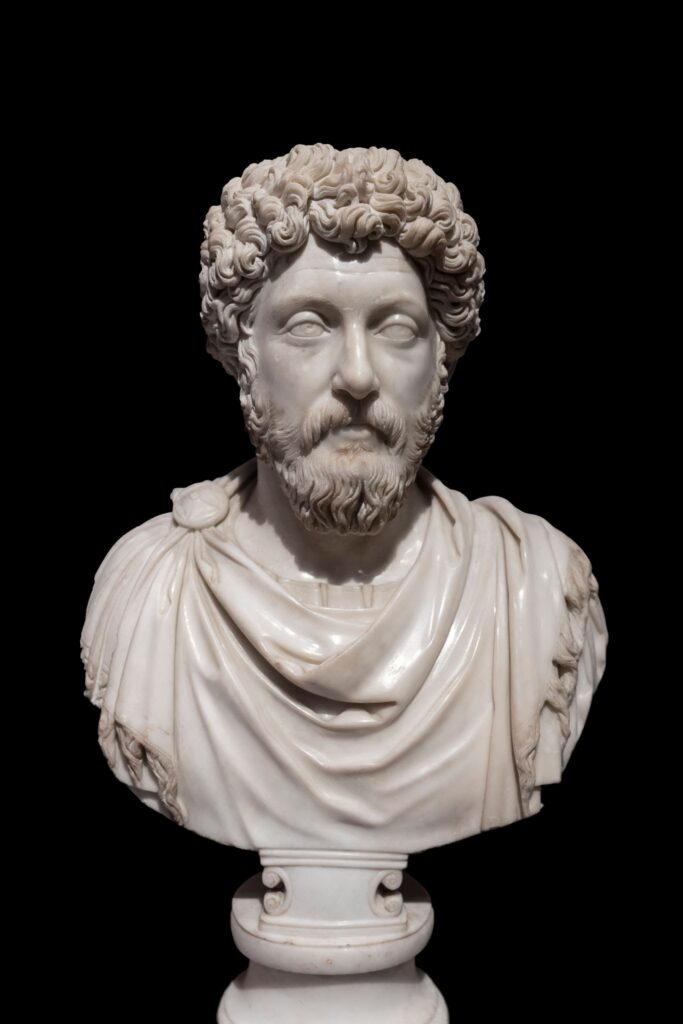
Stoicism is remarkably practical for professional life because it provides an immediate framework for handling high-pressure environments. Let’s break down the four core Stoic virtues and map them directly to career optimization:
| Stoic Virtue | Traditional Meaning | Corporate Translation |
| Wisdom (Phronesis) | Understanding what is good and bad. | Knowing what truly moves the needle vs. what is empty busywork. |
| Courage (Andreia) | Facing fear and standing by your principles. | Having hard conversations, setting boundaries, and taking calculated risks. |
| Justice (Dikaiosyne) | Fairness, kindness, and public duty. | Leading with empathy, mentoring others, and avoiding toxic office politics. |
| Temperance (Sophrosyne) | Practicing self-control and moderation. | Protecting your time, saying “no,” and avoiding the trap of workaholism. |
4 Stoic Strategems to Reclaim Your Energy and Optimize Your Career
To implement Stoicism in your day-to-day life, you don’t need to read thick leather-bound books at your desk. You just need to integrate four specific, actionable cognitive shifts into your routine.
1. Master the Dichotomy of Control
This is the foundational pillar of Stoic philosophy. Epictetus famously opened his Enchiridion by stating: “Some things are in our control and others not.”
In your career, you only control two things: your inputs and your actions. You do not control the outcomes.
- Out of your control: Whether you get the promotion, how your boss reacts to bad news, market downturns, or sudden budget cuts.
- In your control: The preparation you put into your pitch, your tone during tough meetings, how many resumes you send out, and how well you treat your coworkers.
How to apply it tomorrow: The next time a project goes off the rails, draw a line down a sheet of paper. On the left side, list everything you cannot change about the situation. On the right side, list the immediate actions you can take. Focus 100% of your energy exclusively on the right column. Everything else is background noise.
2. Practice Premeditatio Malorum (The Premeditation of Evils)
Most professionals live in a state of low-grade anxiety because they are trying to outrun their fears. Stoics do the opposite: they look their worst-case scenarios dead in the eye.
Premeditatio Malorum is the practice of intentionally imagining the worst possible outcomes before they happen. This sounds cynical, but it actually drains the terror out of the unknown.
When you mentally rehearse losing a client, missing a deadline, or even getting fired, two things happen:
- You realize you would survive it.
- You can build a proactive contingency plan instead of reacting out of raw panic.
3. Adopt the View from Above
When you are deep in the corporate grind, a passive-aggressive email can feel like a life-or-death crisis. Your world shrinks down to the size of your laptop screen.
The Stoics used a visualization tool called the “View from Above.” They imagined zooming out from their immediate surroundings—up out of their room, above their city, above their country, and eventually looking down at the entire planet.
In a career context, this means zooming out chronologically and contextually. Ask yourself: “Will this specific problem matter in five weeks? Five months? Five years?” In almost every case, the answer is no. This shift lowers your cortisol levels and restores the perspective required for creative problem-solving.
4. Reframe Obstacles as Fuel (Amor Fati)
Marcus Aurelius wrote a phrase that became the blueprint for modern high-performance coaching:
“The impediment to action advances action. What stands in the way becomes the way.”
In modern terms, this is ultimate cognitive reframing. If a client dumps your agency, a non-Stoic spirals into self-doubt and resentment. A Stoic adopts Amor Fati (a love of one’s fate) and views the setback as a masterclass in adaptation. The loss becomes an opportunity to audit your pitch deck, target a better class of clientele, and stress-test your business model. The obstacle isn’t blocking the path; it is the path.
The ROI of Stoicism: What Happens to Your Career?
When you stop wasting emotional bandwidth on things you cannot control, your professional value skyrockets. True career optimization isn’t about working until your eyes bleed; it’s about operating with absolute clarity.
[Traditional Corporate Mindset] -> High Emotional Reactivity -> Fractured Focus -> Chronic Burnout
[Stoic Corporate Mindset]     -> Radical Acceptance        -> Laser Focus     -> Sustainable Peak Performance
When you adopt a Stoic framework, your workflow shifts in highly profitable ways:
- Negotiation Leverage: Because your self-worth isn’t desperately tied to a specific outcome, you can sit at the negotiation table with total calm. You can state your terms clearly, without the needy desperation that kills deals.
- Unshakeable Leadership: While everyone else is panicking during a restructuring or a missed quarter, the Stoic leader remains level-headed, anchoring the team and identifying the next logical pivot.
- Ruthless Prioritization: Temperance gives you the discipline to stop saying “yes” to low-impact tasks just to please people. You protect your time for the projects that actually generate revenue and recognition.
Conclusion: Turning Philosophy into Profit
Burnout is not a badge of honor, nor is it an unavoidable cost of doing business. It is a sign that you are mismanaging your most valuable asset: your mind.
By applying Stoicism to your career, you stop reacting to the volatility of the corporate landscape. You stop letting external metrics dictate your internal peace. You realize that you don’t need a perfect boss, an unshakeable market, or a lighter workload to be successful—you just need total command over your own character and choices.
The next time your inbox explodes or a high-stakes presentation looms, take a breath. Zoom out. Separate what you can control from what you cannot. Step onto the corporate battlefield not as a victim of its stress, but as the master of your response. That is the ultimate Western secret to beat burnout, optimize your career, and build lasting, sustainable success.
Take Your Career Optimization Further
- Deepen Your Knowledge: If you want to dive straight into the source material, pick up a copy of Marcus Aurelius’s personal journal, Meditations, or Seneca’s classic essays, Letters from a Stoic.
- Track Your Mindset: To practically apply the Dichotomy of Control at work, use a daily reflection journal. Write down your morning inputs (what you plan to do) and execute an evening review evaluating how you handled the events of the day, completely independent of the outcomes.
Discover more from 𝙲𝙷𝙰𝚁𝚄𝚅𝙰𝙺.𝙲𝙾𝙼
Subscribe to get the latest posts sent to your email.